Newlyn Bailiffs: What to Do and How to Stop Enforcement
Newlyn are an enforcement agency used by councils and other organisations to recover certain unpaid debts. If you've received a letter, Notice of Enforcement or visit from Newlyn, this guide explains what the enforcement process means, what enforcement agents can and cannot do, the fees that may be added to your account and what options may be available to you.
The rules can vary depending on the type of debt, so it's important to establish who the original creditor is and what type of enforcement action is being taken.
What Should I Do If Newlyn Contact Me?
IMPORTANT!!! If a bailiff is at your door, DO NOT LET THEM IN!
For many types of debt, an enforcement agent cannot simply force their way into your home. The rules depend on the type of debt and circumstances, so don't assume every enforcement situation is the same. If an enforcement agent is at your door, or has left a visit letter, call our Helpline on 0800 3688 286
now.
If Newlyn enforcement agents have contacted you, it is important that you do not ignore their communications, and that you seek help now. As you get further down the debt collection process, the more difficult the circumstances will become for you.
Need Help?
If you need help with Newlyn enforcement, call our FREE Helpline on 0800 3688 286(freephone, including all mobiles) for a confidential conversation or get debt help online.
If you have received a letter or calling card from a bailiff claiming that you have an outstanding debt or if you’ve been visited by Newlyn bailiffs the best thing to do is to call the bailiff helpline immediately.
We can provide advice, free of charge. We will speak to the bailiff on your behalf, and can arrange for a temporary hold on bailiff action, whilst the problem is sorted out.
Who are Newlyn Enforcement?
Newlyn Plc is a prominent UK civil enforcement agency (bailiff company) established in 1999 and based in Northampton. They work on behalf of local authorities and public sector bodies across England and Wales to collect unpaid public debts like Council Tax, Business Rates, and Penalty Charge Notices.
They are a limited company, registered at Companies House (Company number 03770985).
The enforcement agents who work for them hold certificates granted by a judge at the county court. These certificates allow them to carry out enforcement action.
All enforcement agents are regulated by the Ministry of Justice.
Newlyn provides enforcement and debt collection services to local authorities and other public-sector organisations across England and Wales.
They collect Council Tax, Business Rates, Parking Penalty Charge Notices.
If Newlyn Plc are contacting you about Council Tax arrears, our guide explains the Council Tax recovery process, liability orders and what happens when Newlyn bailiffs are instructed.
This register holds details of all enforcement agents (previously called bailiffs) who hold a certificate, granted by a judge at the county court. You can search by an enforcement agent's or applicant's name.
Only "fit and proper" individuals should hold these certificates.
If you know of serious conduct issues which would mean that an existing enforcement agent, or an applicant for a certificate, is not a "fit and proper" person, you can use this register to find out which court you should alert to these issues.
If you have any concerns or doubts over the bailiff please call us on 0800 3688 286 and we will check if they are real for you.
Enforcement Officer and Bailiff Scam
We have become aware of scammers phoning members of the public, posing as County Court bailiffs, High Court Enforcement Officers (HCEOs) and Certificated Enforcement Agents (CEAs).
In a number of cases they are claiming to be a bailiff at Northampton County Court.
Please stay vigilant against fraudsters posing as enforcement officers and bailiffs, for more information please visit; https://www.gov.uk
If you have any concerns or doubts over the bailiff please call us on 0800 3688 286 and we will check if they are real for you.
Why Have Newlyn Plc Contacted Me?
They have contacted you because a public sector debt or local council fine has been passed to them for recovery after initial payment attempts failed.
Common reasons for contact include:
Unpaid Council Tax
Penalty Charge Notices (PCN) such as parking or traffic fines
Unpaid business rates
Overpaid benefits
Housing arrears
What type of debt are Newlyn collecting?
Newlyn may be instructed to collect different types of unpaid debt. The type of debt is important because the legal process and enforcement powers can vary depending on what is being collected.
Common types of debt that may be referred to enforcement agents include:
Type of debt
Who the debt may be owed to
Council Tax arrears
Your local council
Business rates
Your local council
Parking penalties
A local authority or other enforcement authority
Traffic penalties
The relevant enforcement authority
Certain court fines or other court-related debts
The relevant court or authority
If Newlyn have contacted you, check your letter or Notice of Enforcement to find out who the original creditor is, what the debt relates to and how much is being claimed.
The type of debt matters. Enforcement agents do not have exactly the same powers and procedures in every situation, so you should establish the nature of the debt before deciding how to respond.
What Is a Notice of Enforcement?
A notice of enforcement is not just a standard debt collection letter, it is a formal legal warning sent via post, either by an enforcement agent (bailiff) or creditor stating that action will be taken to recover an unpaid debt.
It provides you with the mandatory notice period required by law (14 clear days) to pay the balance or set up a payment plan before they can legally take further action, and enforcement agents visit you.
What Information Should It Contain?
A valid Notice of Enforcement issued by an enforcement agent (bailiff) must contain your correct name and address, details of the original court judgment or order, a full breakdown of the debt and statutory fees, and clear notice of the period allowed before a visit. This is 14 days from the date of the letter for relevant cases from 1 May 2026. Sundays, bank holidays, Good Friday and Christmas Day are excluded when calculating the minimum statutory period.
Any errors on the notice need to be raised promptly with supporting evidence rather than treated as an automatic end to enforcement.
Under current UK regulations, you have 14 clear days to respond to a Notice of Enforcement before a bailiff (enforcement agent) can visit your home or business to seize goods.
The 14 days does not include Sundays, Bank holidays, Good Friday or Christmas Day.
The exact deadline date and time will always be clearly printed on the letter itself.
What Happens If I Do Nothing?
If you ignore the "Notice of Enforcement" it will move from compliance to enforcement after the 14-day notice period.
If enforcement progresses to the enforcement stage, a £247 fixed fee can be added. For applicable debts above £1,900, a further 7.5% fee can apply to the amount above that threshold.
Bailiffs can visit your home, as the compliance period has passed they are legally permitted to attend your property to take control of your belongings.
If you need help setting up a payment plan or extending this notice, you can contact us on 0800 3688 286 for free help and advice.
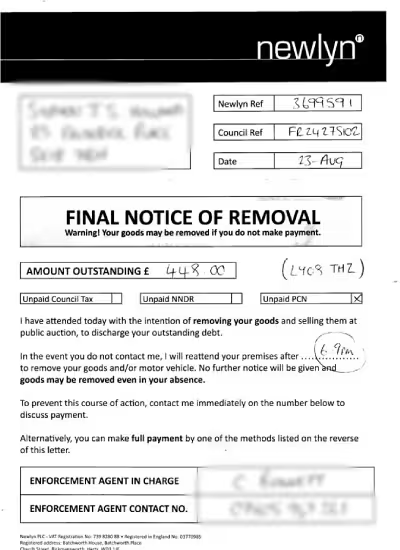
If you do nothing, Newlyn Plc will attend your property and hand deliver the letter pictured below.
Call the Bailiff Helpline on 0800 3688 286
if you need help with this.
How Much Do Newlyn Bailiffs Charge?
Newlyn fees from 1 May 2026
Stage of collection
Bailiff Action
Fixed Fee
% Fee (over £1900 only)
Compliance
Sending you an enforcement notice through the post, requesting payment.
£79
0%
Enforcement
Visiting your home or business premises to take control of goods.
The statutory enforcement fees increased on 1 May 2026. For relevant enforcement cases subject to the amended regulations from 1 May 2026 can incur a £79 compliance fee, £247 enforcement fee and £116 sale/disposal fee, with additional percentage fees applying above the relevant threshold.
Cases referred to enforcement before 1 May 2026 can remain under the previous fee regime of £75 compliance fee, £235 enforcement fee and £110 sale/disposal fee, with additional percentage fees applying above the relevant threshold.
How much the bailiff can charge will depend on your situation.
The fees that a Newlyn bailiff/enforcement agent can charge are outlined under the Taking Control of Goods (Fees) Regulations 2014.
There are three separate stages of bailiff action, called compliance, enforcement and sale of goods.
Newlyn are therefore allowed to charge a fee for each stage of the process of taking action against you.
However, the bailiff fees can only be charged once for each stage of the process, no matter how much work was involved in that stage of the process. So even if a bailiff had to visit your home four times during the enforcement stage, they can only charge the enforcement fee once.
The fees can quickly add up though, so if you have received an "enforcement notice" from Newlyn through the post, don't ignore it. If you do not contact them they will proceed to stage two and charge you another £247, when they send a bailiff to knock on your door.
It may not be too late for you to negotiate a payment scheme with a bailiff on your own.
However, we suggest that you contact us immediately for free advice, we can easily deal with Newlyn for you.
As well as the fixed fees and percentage fees shown above, you may also be charged by Newlyn for disbursements. These can include the following:
Storage costs for your belongings after they were taken away by Newlyn.
Locksmith costs.
Any court fees Newlyn had to pay if they needed to apply to the court at any point.
Auctioneer's costs if they have sold your goods, including commission of up to 15 per cent of the selling price, out-of-pocket expenses and advertising the sale of your goods.
For all expenses charged by Newlyn, you have the right to see receipts and other evidence for the costs they have added to your bill.
Can I avoid bailiff fees by paying the Council or Magistrates' Court direct?
Once enforcement action has reached the stage where statutory enforcement fees have been incurred, paying the original creditor directly may not remove those fees. Before making a payment, check the current balance and enforcement status with the creditor or enforcement agent.
Can Newlyn Enter My Home?
Newlyn enforcement agents cannot force entry into your residential home on a first visit for council tax, parking fines, or civil debts.
They can only enter with your permission (peaceful entry) or if you let them through an open door, when collecting council tax, parking/PCN enforcement or civil debts.
Can They Force Entry?
Forced entry using a locksmith is only legally permitted in rare cases, such as collecting unpaid Magistrates' court criminal fines or specific government taxes, and never for standard local authority council tax or consumer debts on a first visit.
If you previously let them in and signed a Controlled Goods Agreement, but then broke the terms of a payment arrangement, they can return and use reasonable force (like a locksmith) to re-enter.
Need Help?
If you need help with Newlyn enforcement, call our FREE Helpline on 0800 3688 286(freephone, including all mobiles) for a confidential conversation or get debt help online.
For many types of debt, you do not have to let an enforcement agent into your home. However, if you have previously allowed them to enter and signed a Controlled Goods Agreement, different rules can apply if you later break the agreement.
However, this will not get rid of the debt, and extra fees may be added.
They may attempt to visit the property again, particularly if enforcement remains outstanding.
If enforcement agents are unable to gain entry or take control of sufficient goods, the creditor or relevant authority may consider other methods of recovering the debt. These can include deductions from wages or benefits or other enforcement action, depending on the type of debt.
What time do Newlyn bailiffs work till?
They can attend your property between the hours of 6 am and 9 pm.
Enforcement should not be undertaken on Sundays, on Good Friday or on Christmas Day.
However they can carry out enforcement outside of these hours under the following circumstances:
If they have a court order saying they are entitled to operate outside the hours of 6 am and 9 pm
If your belongings of value are at a premises that trades outside the hours of 6 am and 9 pm, at a business premises for example, then the bailiff can visit during this time. A good example of this would be a pub, restaurant or club.
If a bailiff is in the process of seizing your belongings within the hours of 6 am and 9 pm but they have not finished before 9pm, then they may stay and complete their enforcement.
What Can Newlyn Take?
They have the legal power to remove and sell your belongings to pay a debt you owe. In most cases, bailiffs only get involved after your creditor has taken you to court.
If you let a bailiff into your home they can take:
luxury items, such as a TV or games console
things you own jointly with someone else
money, jewellery and antiques
They cannot take:
things you need to live, eg your clothes, cooker, fridge
work tools and equipment which together are worth less than £1,350
someone else’s belongings, eg your partner’s computer
Proving that the items don't belong to you isn't always easy.
If Newlyn have taken your goods.
If the bailiff has taken your goods you can still get them back, but you will have to:
Settle your debt before the goods are sold by Newlyn.
Make an agreement with your creditor and get them to ask Newlyn to return your goods.
You buy the goods back yourself.
The Newlyn bailiff did not follow the correct procedure when they took your goods.
Can Newlyn take my car?
Cars are one of the most popular things for a bailiff to seize. This is because they usually have value, are easy to seize and also for the bailiff to sell on.
Bailiffs are allowed to take cars and vehicles, but they have to follow certain rules.
A bailiff can only take control of a vehicle that's actually owned solely or jointly by the debtor.
A car displaying a Blue Disabled Badge cannot be taken.
Alternatively, the bailiff may leave the car with you as long as you sign a Controlled Goods Agreement, this means you promise that you won't try to sell or get rid of the vehicle and agree to a payment plan. If you don't keep to the terms of this repayment plan, the bailiff will come back and seize your vehicle.
Call the Bailiff Helpline on 0800 3688 286 if you need help.
What If the Car Is on Finance?
If your car is subject to a Hire Purchase (HP) or Personal Contract Purchase (PCP) agreement, the position can be different because you may not legally own the vehicle. If a bailiff tries to clamp or take a financed vehicle, provide evidence of the finance agreement as soon as possible.
They may clamp or immobilise a financed vehicle while they make enquiries about its status. CIVEA states that an enforcement agent must allow a minimum of 2 hours before the vehicle can be removed while its status is being checked.
If your car has been clamped and is on finance, contact the bailiff and send them a copy of the outstanding finance agreement. This can provide evidence that you are not the legal owner of the vehicle. Or you can inform your finance company straight away; they will often contact the enforcement agency directly to demand the release of their vehicle.
The V5C logbook shows the registered keeper of the vehicle, not the legal owner, so showing the V5C in your name does not prove ownership to the bailiff.
What If I Need It for Work?
There are specific rules protecting items and equipment you personally need for your work, business, trade, profession, study or education.
This can include a vehicle, tools, computer equipment and other essential work equipment. The exemption applies to the combined value of these items up to £1,350.
For example, if you need a van to carry tools to jobs, you should explain this to the enforcement agent and provide evidence showing why you need the vehicle for your work. Useful evidence could include invoices, work orders, employment documents or other information showing how the vehicle is used.
If you believe Newlyn are trying to take a vehicle or other equipment that should be exempt, tell the enforcement agent why you believe it is protected and provide supporting evidence. If the issue is not resolved, you may need independent debt or legal advice about your particular circumstances.
The bailiff has clamped my car, can I remove it?
No, do not remove the clamp from your vehicle. Under section 68.1 of Schedule 12 (TCEA 2007) it is a serious offence to remove a wheel clamp or to obstruct the bailiff from clamping or removing the vehicle. You risk being fined or sent to prison for a term not exceeding 51 weeks!
A bailiff can take your car if it is parked on a public highway, but they can't take a car parked on private land belonging to someone else without a court order.
How many times can a bailiff visit?
We often hear "they can only visit three times then they have to hand the debt back". This is not true. There is no fixed number of times a bailiff can visit you to try to recover the debt.
However eventually they may return the warrant to the court or local authority if they are unable to gain entry, or you do not have enough goods to pay off the debt and fees.
There are several ways enforcement action may be stopped or paused, depending on your circumstances. These can include paying the debt, agreeing an arrangement with the enforcement agent, or qualifying for a formal debt solution.
If the bailiff is refusing to accept an affordable repayment plan from you, call the FREE Bailiff Helpline on 0800 3688 286(freephone, including all mobiles)
What If the Debt Isn't Mine?
If bailiffs (enforcement agents) chase you for a debt that is not yours, contact them immediately using the telephone number on their "Notice of Enforcement". Tell them you are not the named person, ask them to put the case on hold, and email proof—such as a tenancy agreement, utility bill, or your ID.
What If I Cannot Afford to Pay?
If you cannot afford to pay a bailiff (enforcement agent), do not panic or let them into your home. You have the right to keep your doors locked and speak to them through the letterbox or by phone.
If you have received a notice of enforcement through the post, call the number on the letter and try to arrange an affordable repayment plan.
Propose an affordable weekly or monthly payment plan based on a realistic budget. If you need help with doing this, call the FREE Stop Bailiffs Helpline on 0800 3688 286 immediately.
Can a Bailiff Arrest Me?
A bailiff cannot normally arrest you simply because you owe money or because you refuse to let them into your home.
However, some criminal matters have different rules. Approved enforcement agencies can execute certain arrest warrants issued by magistrates' courts, including warrants relating to unpaid criminal financial penalties or breaches of a community penalty order.
If a bailiff or enforcement agent threatens to arrest you because of an ordinary civil debt, ask them to explain the legal basis for the threat. If you are unsure about your position, seek independent legal or debt advice.
Broken payment arrangement
If you cannot maintain the agreed payments, contact Newlyn as soon as possible and explain your circumstances. For example, your income or expenditure may have changed since the arrangement was agreed.
If you miss payments without contacting the enforcement agent, they may cancel the payment arrangement and continue enforcement. This may result in further enforcement action and additional fees.
If you are struggling to maintain the arrangement, you can ask whether a revised payment arrangement is possible. Any offer should be based on what you can realistically afford after paying your essential household expenses. The enforcement agent does not have to accept your proposed payment amount.
If the arrangement has already been cancelled, contact Newlyn promptly to explain why you missed the payment and ask what options are available. You may also wish to seek independent debt advice.
IMPORTANT: If this has happened to you, call our helpline on 0800 3688 286.
We can help you assess what you can realistically afford and, where appropriate, help you communicate with the enforcement agent or creditor about your options.
Can an IVA Stop Newlyn?
Yes, an Individual Voluntary Arrangement (IVA) stops bailiffs and High Court enforcement officers from collecting unsecured debts included in the agreement.
An IVA covers unsecured debts like council tax arrears, parking tickets, utility bills, and credit cards. Read our full guide to "what is an IVA" here.
Once approved by your creditors, it voids existing collection actions, including any Controlled Goods Agreements.
However, it does not provide immediate protection whilst it is pending approval. We can however arrange for the compliance stage to be extended to 28 days if you need more time to enable it to be put in place.
Can Breathing Space Stop Newlyn?
Yes, the Breathing Space scheme (Debt Respite Scheme) stops bailiffs (enforcement agents) from taking new enforcement action or visiting your property for qualifying debts.
Once active, it pauses most legal processes and freezes interest and charges for up to 60 days
Any new court action by creditors will also be blocked, and they can not start new bailiff action while you are protected by breathing space.
What If I'm Vulnerable?
If you are vulnerable, Newlyn bailiffs (enforcement agents) must follow strict rules to protect you.
They cannot enter your home if the only people present are vulnerable or under 16, they must give you extra time to get advice, and they cannot take essential items needed for your health.
Your Protections As A Vulnerable Person
No entry when alone: bailiffs must never enter your home if you are the only person there and are classed as vulnerable.
The bailiff must leave immediately if the only people present are vulnerable individuals or young children.
Extra time: They must give you adequate time to seek debt advice or put your case on hold.
Protected items: They cannot take anything you need for basic health, medical care, or safety
What Counts as Vulnerability
Serious physical or mental health conditions.
Disability or severe learning difficulties.
Being elderly, pregnant, or recently bereaved.
Language barriers or difficulty understanding English.
What Should You Do?
You need to tell them in writing about your vulnerability: Send a letter or email to the bailiff company and your creditor explaining your vulnerability, ideally with medical or support evidence. You can use our template letter.
How Do I Complain About Newlyn?
If you want to complain about a Newlyn Plc enforcement agent you should call their head office on 01604 623268, email complaints@newlynplc.co.uk or put your complaint in writing to: Compliance Officer, Newlyn PLC, PO Box 933, Northampton, NN1 2NE.
They have an independent compliance department which will conduct an investigation into every complaint that they receive.
Remember to keep a copy of any letters that you send, so you have an audit trail of what was sent and when.
If you are not happy with their response, or have not received a reply within 30 days you can escalate your complaint to the High Court Enforcement Officers’ Association in the following ways:
Email your complaint to complaints@hceoa.org.uk
Call 0844 824 4575
How do I contact Newlyn bailiffs?
Company Name: Newlyn plc
Other Names: Newlyn, Newlyn Bailiffs, Newlyn enforcement
Monday - Friday: 8:00 am - 8:00 pm
Saturday - Sunday: 8:00 am - 1:00 pm
Do Newlyn Bailiffs have a free phone number?
Unfortunately they do not have a freephone number
So if you have no credit on your phone you can call us free on 0800 3688 286
and we will help you.
Please note that we are not associated with Newlyn in any way. The information on this page is provided to help people contact their creditors.
If you're finding it difficult to make your monthly payments to Newlyn you may need help looking at your budget and managing your debt. We deal with bailiffs all day, every day and we know exactly how to approach them. If you're struggling to repay a debt and would like us to deal with Newlyn on your behalf, or simply need a bit of advice, just click on the STOP BAILIFFS NOW button below.
Forced entry using a locksmith is only legally permitted in rare cases, such as collecting unpaid Magistrates' court criminal fines or specific government taxes, and never for standard local authority council tax or consumer debts on a first visit.
If you previously let them in and signed a Controlled Goods Agreement, but then broke the terms of a payment arrangement, they can return and use reasonable force (like a locksmith) to re-enter.
Yes, bailiffs can potentially take your car if it belongs to you and is not legally exempt. There are specific rules about where a vehicle is parked, ownership, finance agreements and vehicles needed for work.
They are generally only permitted to take control of goods that belong to the person named on the enforcement notice, subject to the specific rules and exemptions that apply.
If you say that goods belong to someone else, you may need to provide evidence of ownership. If ownership is disputed, there are formal procedures for making a claim to the goods.
If an item is jointly owned, different rules can apply. Enforcement agents may be able to take control of jointly owned goods, but the position can depend on who owns the goods and the type of debt being enforced.
No, ordinary bailiffs (enforcement agents) do not have a general power to arrest you. If an unpaid Magistrates' Court fine leads to an arrest warrant, however, different rules apply and the warrant may be enforced by the police or an Approved Enforcement Agent with the appropriate authority.
Ignoring the bailiffs will not make the debt go away. Instead, it will mean extra fees are added to what you owe, it will lead to home visits, and can result in them taking control of your belongings
Yes, Breathing Space can stop most court action for up to 60 days. It can stop visits from people who collect debts, such as bailiffs. You have to meet certain criteria to trigger this. Please call our team if you need to put this in place.
Call the enforcement agency immediately using the number on their notice, state that you are not the named person, ask them to put the case on hold, and send written proof.
Need Help?
If you need help with Newlyn enforcement, call our FREE Helpline on 0800 3688 286(freephone, including all mobiles) for a confidential conversation or get debt help online.
Most people think that if they go bankrupt, it will get rid of all of their debts. However, this is not always the case. You may still be liable for some debts...
Wondering if you can get a debt relief order, sometimes referred to as DRO? This section explains what a debt relief order is, and the steps you need to take to apply for a debt relief order...
I Contacted them at 5 pm on a Thursday night,they arranged a meeting Friday morning with all the relevant bodies their because my case was the following Monday .I can't sing their praises high enough they contacted the courts same afternoon. Fantastic response, I avoided bankruptcy on the Monday and was given time to arrange an Iva. I risked losing my home,my mother and fathers home all hope seemed lost until I made that fateful phone call. I can now sleep at night.
Monday - Friday: 8:00 am - 9:00 pm
Saturday - Sunday: 10:00 am - 4:00 pm
To find out more about managing your money and getting free advice, visit Money Helper, an independent service set up to help people manage their money.
The ATN Group provides insolvency solutions to individuals throughout the UK; specialising in IVAs, CVAs, Liquidations, Protected Trust Deeds, Bankruptcy, Sequestrations. We do not administer or provide advice solely relating to debt management products, such as Debt Management Plans or Debt Payment Plans under the Debt Arrangement Scheme. We only provide advice after completing or receiving an initial fact find where the individual(s) concerned meets the criteria for one of our insolvency solutions, therefore, all advice is given in reasonable contemplation of an insolvency appointment.